The layering of thin, transparent washes on top of dried layers, to achieves a rich luminosity
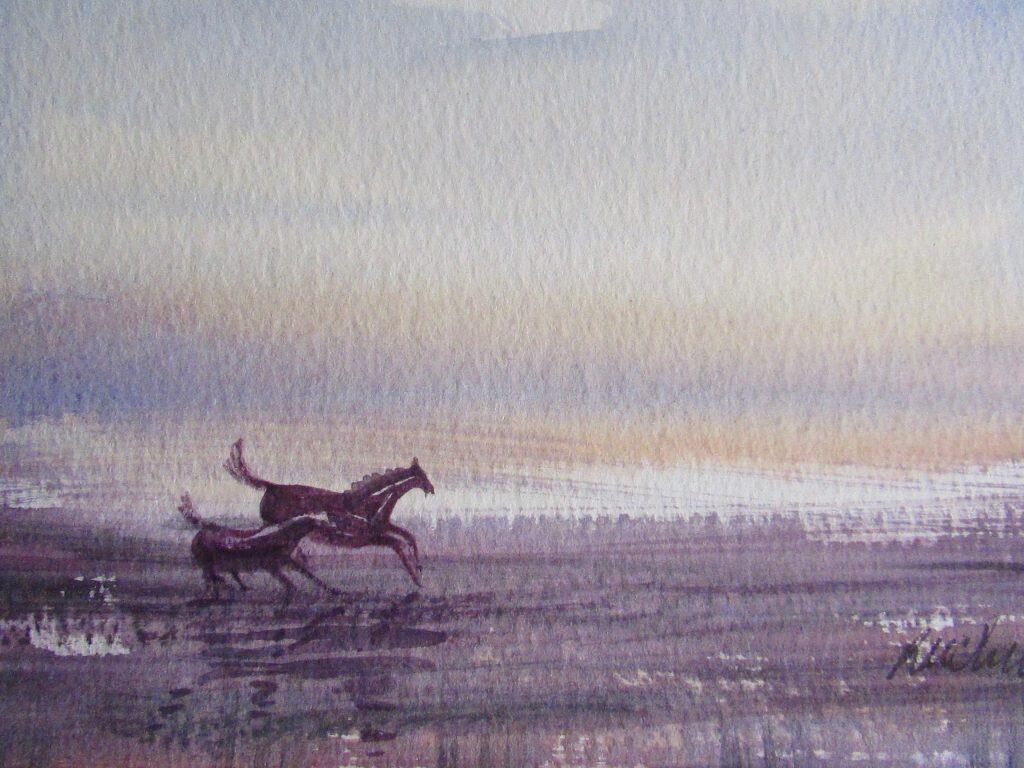
The glazing technique in watercolor painting involves layering thin transparent washes over dried layers to get a luminous effect that shines out beautifully. The technique does take practice and a lot of patience, but the outcome is usually well worth the effort. You get a kind of interplay of colors that would be impossible to achieve by direct painting.
But first things first, if you’re going to make the effort, you need to know that in this case, quality materials do make a difference, though, of course, initial practice using cheap materials makes perfect sense. After a few practices you, ‘ll have the confidence to make those bold, sweeping strokes, of a fully loaded brush, that this technique demands, and then repay with results
By layering glazes, you can get subtle variations in color especially apparent in the interplay between light and shadow. The artist can use the technique to enhance the vibrancy of a particular feature, subtly drawing the eye to the focus of interest

Thinking about this technique reminds me of what first impressed me in the work of one of my early favorite painters – the great American painter and teacher John Pike. By a very few strategically placed shadow washes he could evoke the feeling of blinding sunlight. This could be in urban subjects where early morning or late afternoon shadows skipped across streets and buildings, or in snowy landscapes where the sunlit snow shone out.
I always advise my painting friends to seek out his books for instruction and inspiration. His work showed me the value of the glazing technique in a very practical way, and very simply applied, loosely and not obsessing over perfection.
For practice, if you’re new to watercolor you could start by mixing 3 separate large puddles of each primary color, preferably transparent versions of red, yellow, and blue. You make a very watery mix of each color and paint a flat layer or glaze over each, carefully waiting for each layer to dry thoroughly.
Practice laying the glazes in a different order and observe the differences in the final color each time. This sort of exercise also helps to train your memory to anticipate what will happen in real paintings in the future. Prior knowledge and experience of this sort will give you the confidence to paint loosely and with the spontaneity we all admire in the watercolor medium.
In my experience most painters start with the lightest or yellow glaze, then the red, and finally the blue – this plan would be typical for a glowing sky or sunset. I found some great examples of this method by the late Claud Kitto, another great watercolour painter of the past, who,s work you would get great value from observing – especially in the way he simplified objects and whole scenes.